Notable caves of Catalonia
Catalonia has over 4,800 catalogued cavities: caves and potholes documented with exact coordinates, surveys, and often a century or more of exploration history. Among all of them, these ten stand out for their size, depth, and the richness of their history -- from the country's longest cave to a shaft whose exploration was halted only a few years ago. Each entry tells the real story of who found it, when, and how: from shepherds and miners who knew of it without realising what it was, to cavers who returned decades later to keep exploring it. All the information comes from EspeleoÍndex's technical catalogue, with a direct link to each cavity's full record.
Cova Cuberes — 13,513 m
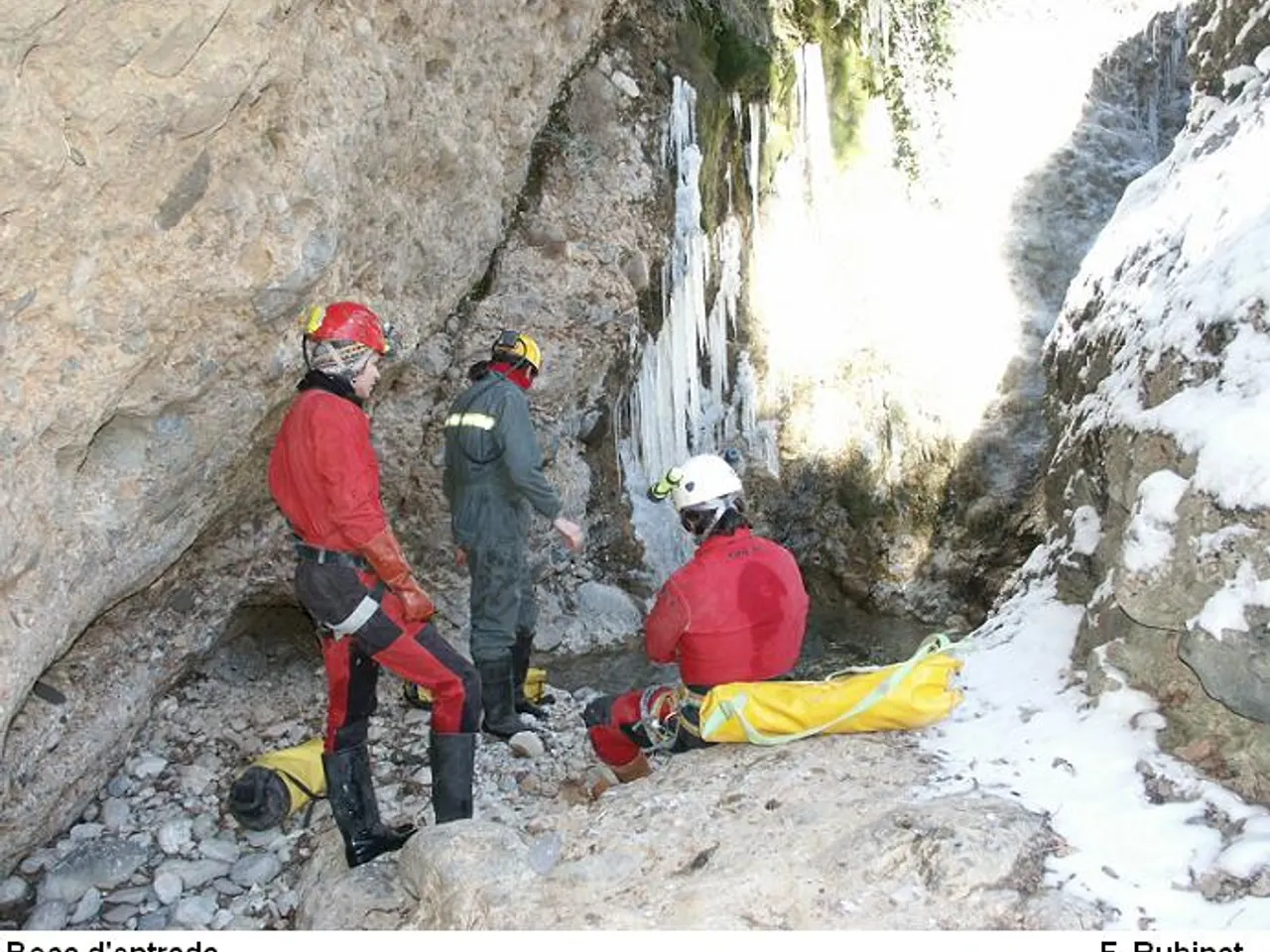
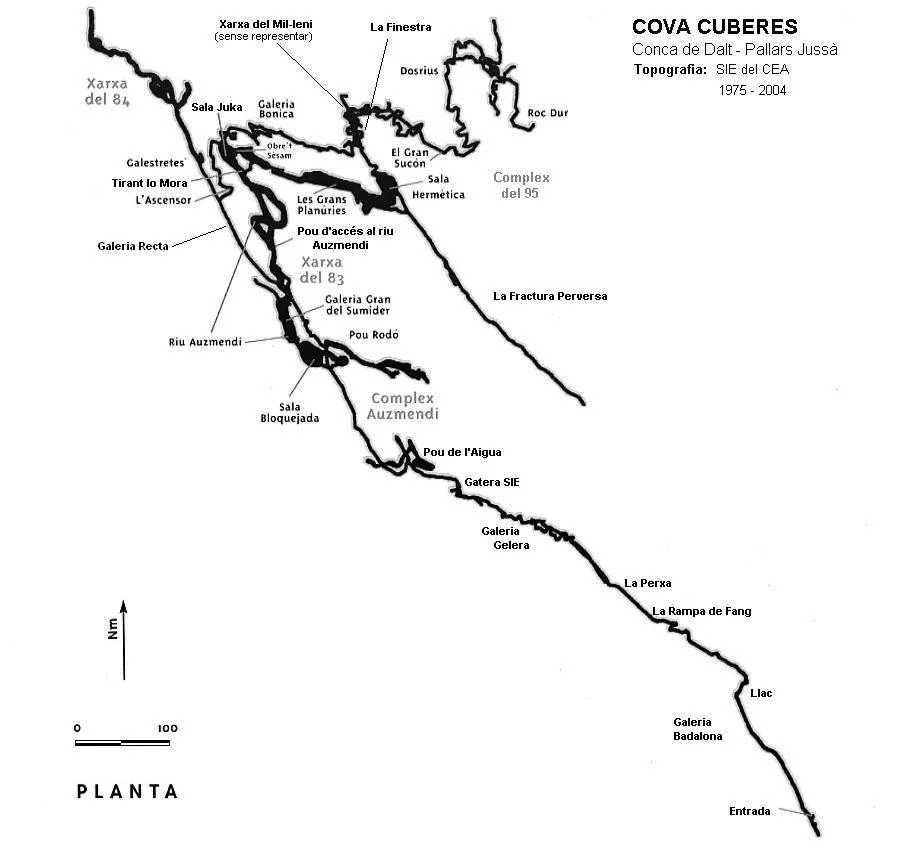
In Conca de Dalt (Pallars Jussà), it is by far the longest cave in Catalonia. Font i Sagué already noted, in his 1897 Catàlech Espeleològich, the existence of a hole near Serradell from which air escaped and the sound of water could be heard -- without certainty that it was this same cavity. Its current name comes from Esteve Cuberes, a local mayor in the 1950s linked to its exploration.
Here is how its survey looks:
Cova dels Meandres de Sal — 4,300 m
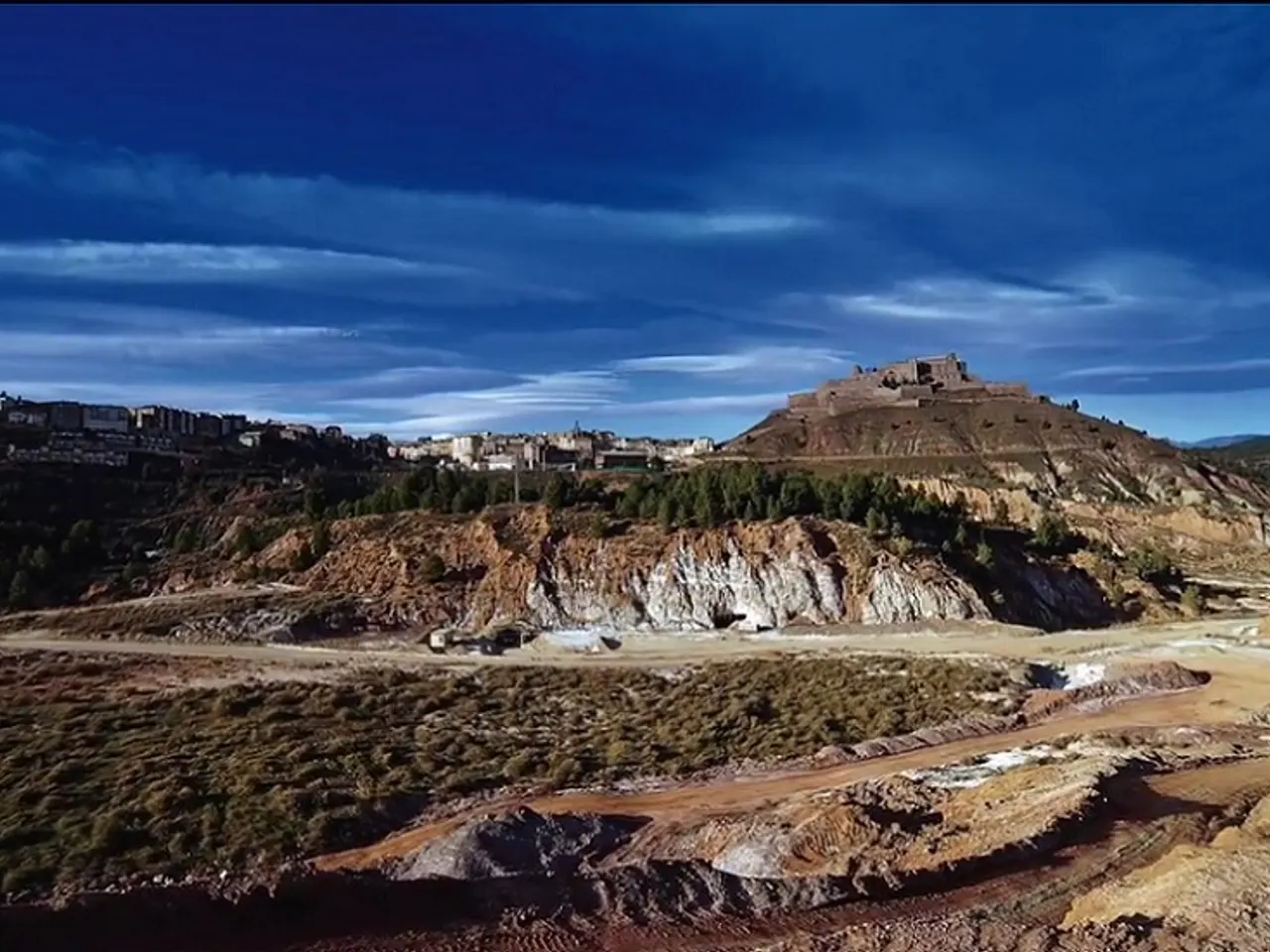
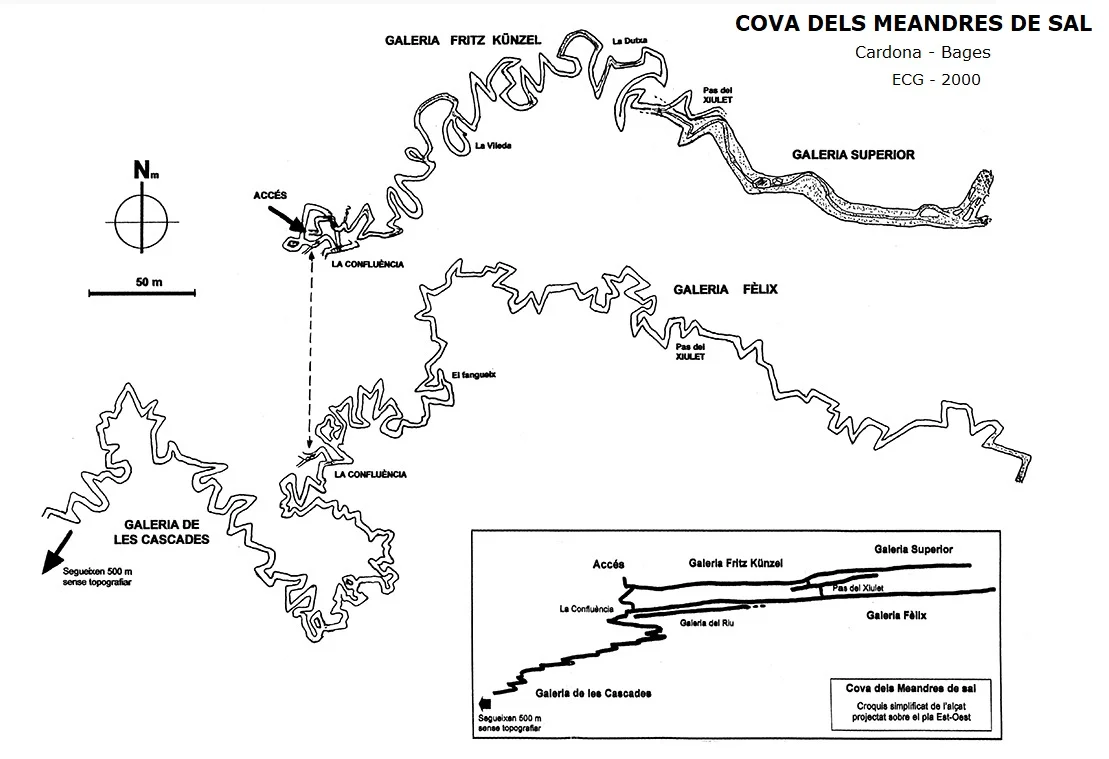
In Cardona (Bages), this cave is carved out of rock salt, an uncommon geology in the catalogue. Access opened up when a tunnel was built to cut off a meander of the Cardener river; members of the Espeleo Club de Gràcia carried out the first speleological exploration on 3 May 2000, a few months before that tunnel's inauguration.
The survey details its layout:
Cova del Serrat del Vent — 4,273 m
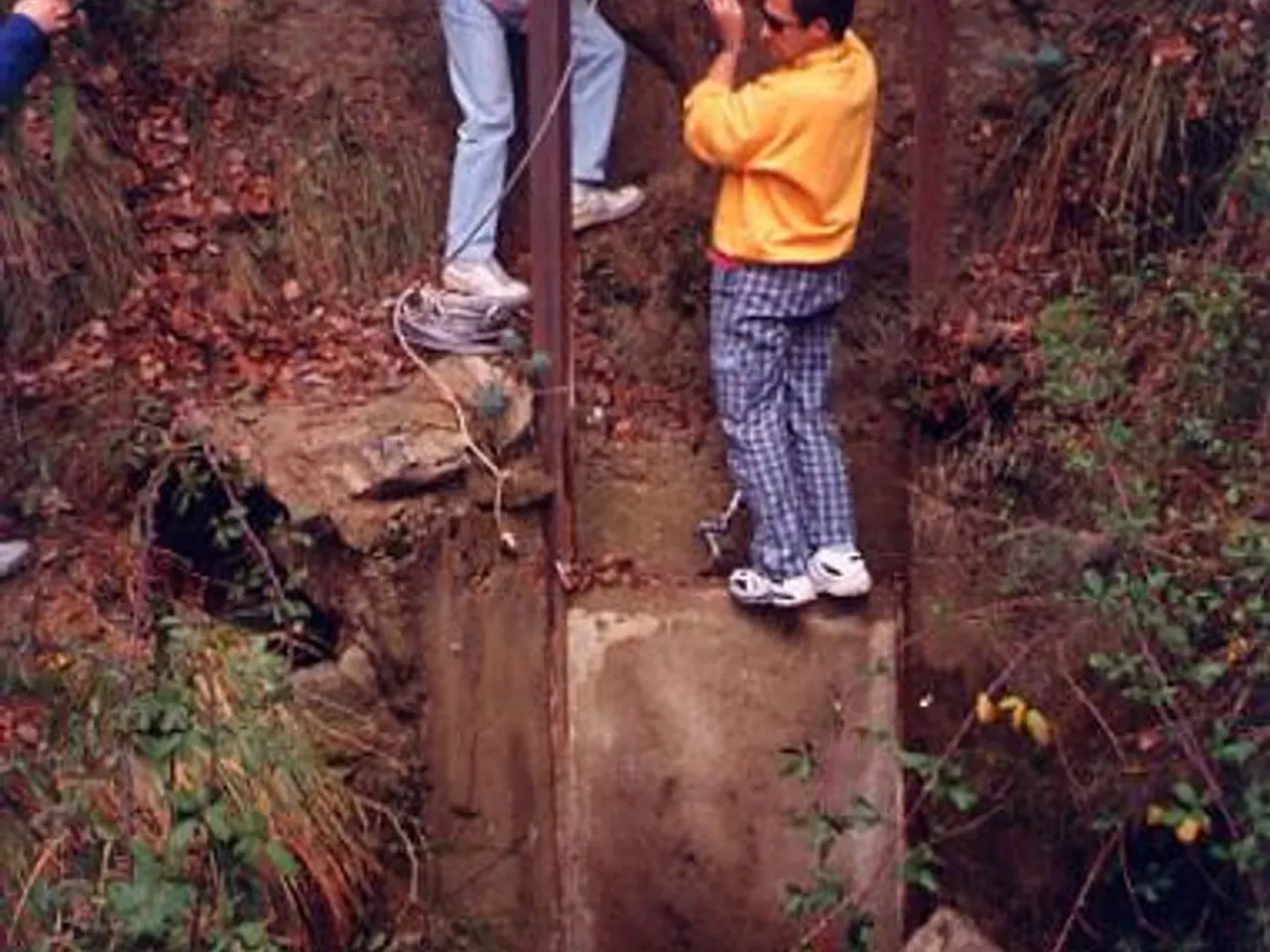
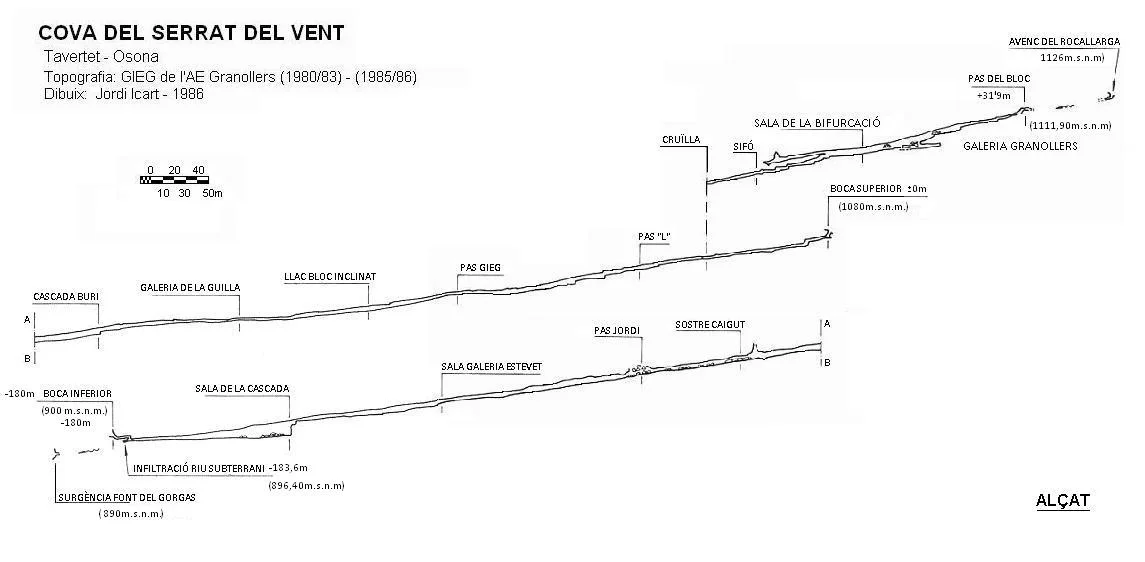
In Tavertet (Osona), it was discovered in mid-August 1979 during municipal works to improve the water supply, after a drought had dried up the spring supplying the town. While searching for water around the municipality, residents noticed a small draughting crack from which cold, humid air was escaping.
This is its survey:
Cova de la Fou de Bor — 4,246 m
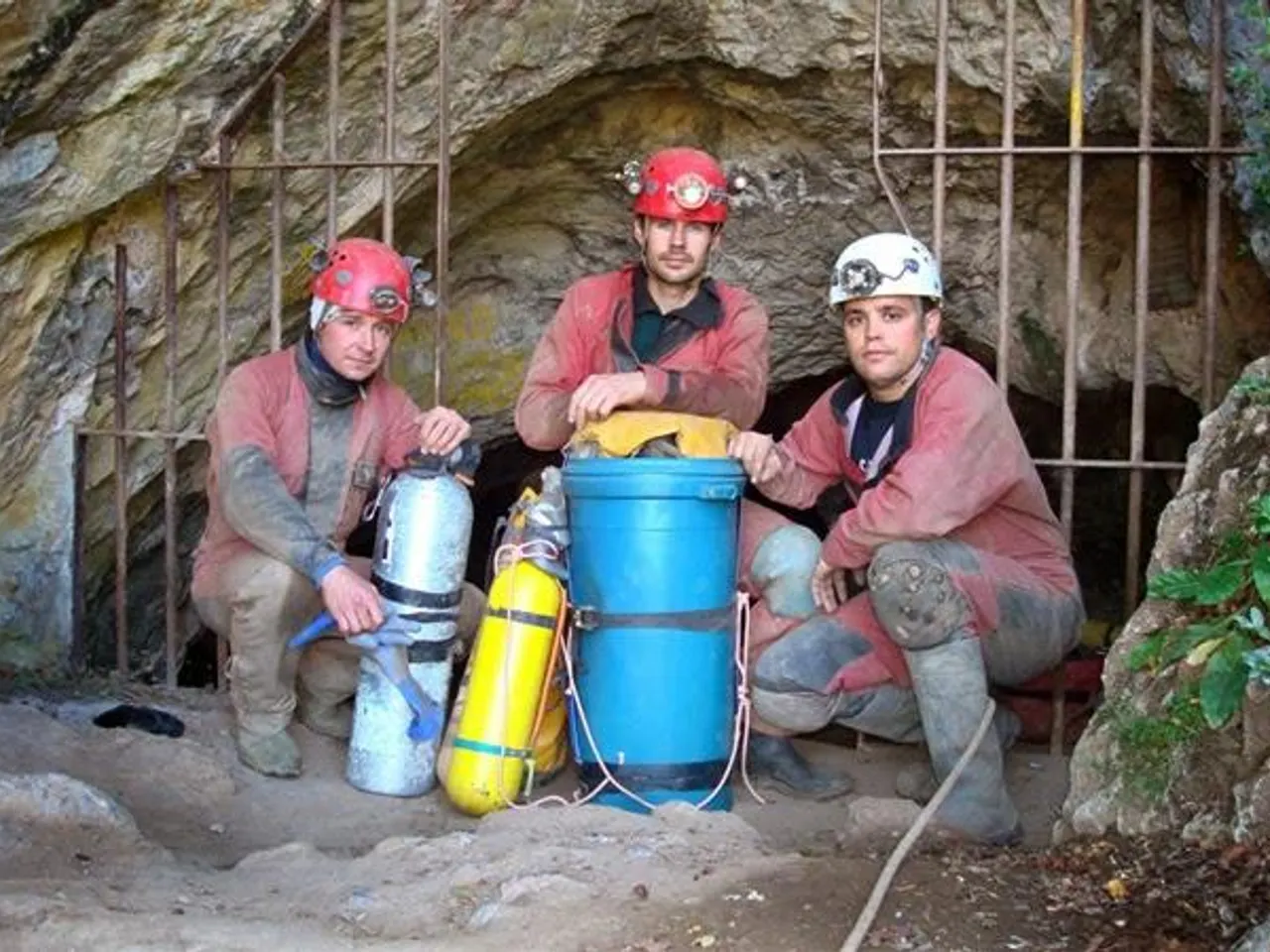
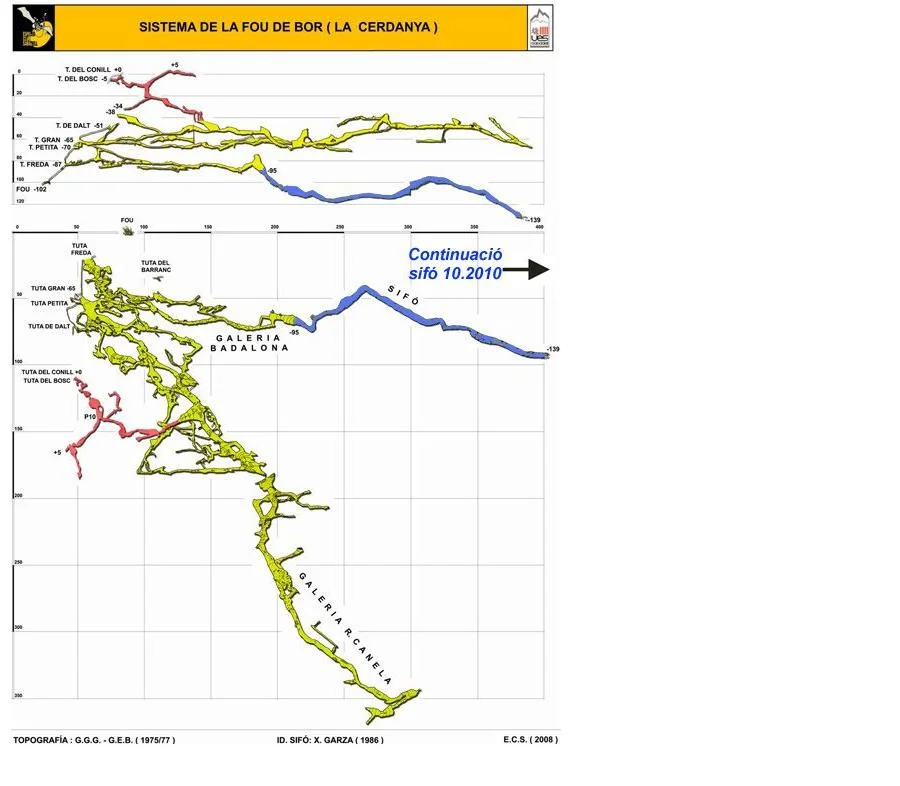
In Bellver de Cerdanya, it has been known since time immemorial. The first documented hiking visit dates from 1 October 1885, by members of the Associació Catalanista d'Excursions Científiques led by Cèsar A. Torras. On 18 September 1896 it was also visited by E.A. Martel, one of the founding figures of modern speleology.
The survey map confirms it:
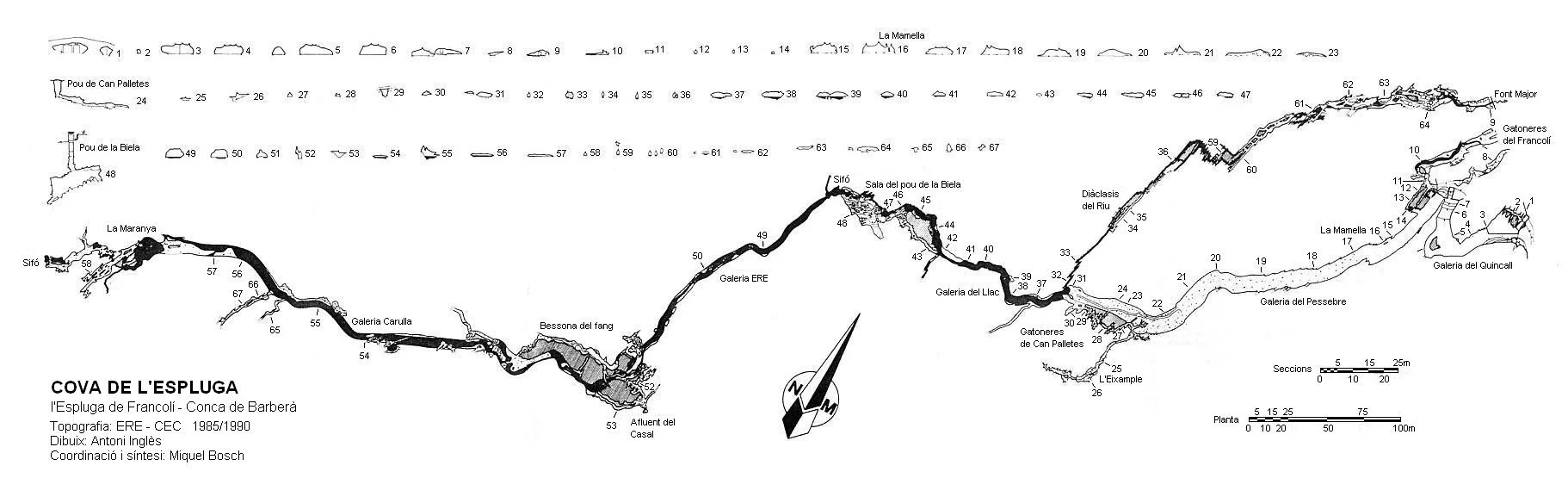
Cova de l'Espluga — 3,590 m
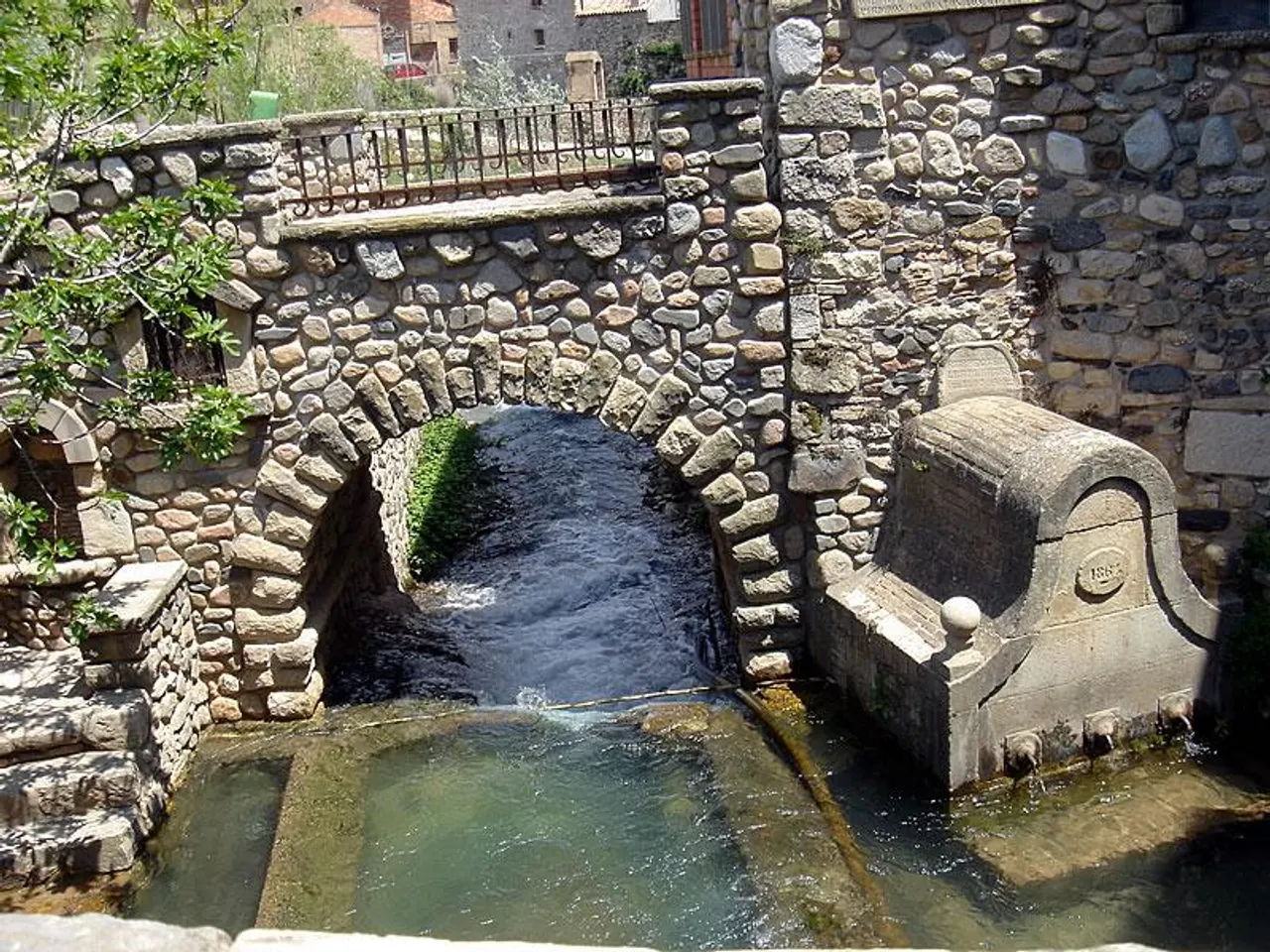
In L'Espluga de Francolí (Conca de Barberà), it holds both speleological and archaeological significance: remains found there show human presence dating back to the Lower Paleolithic, around 300,000 years ago. Its entrance was later sealed by Roman-era sediment and the cave was forgotten until it was rediscovered on 21 April 1853.
Here's its survey:
Sistema de la Bargadèra — 571 m
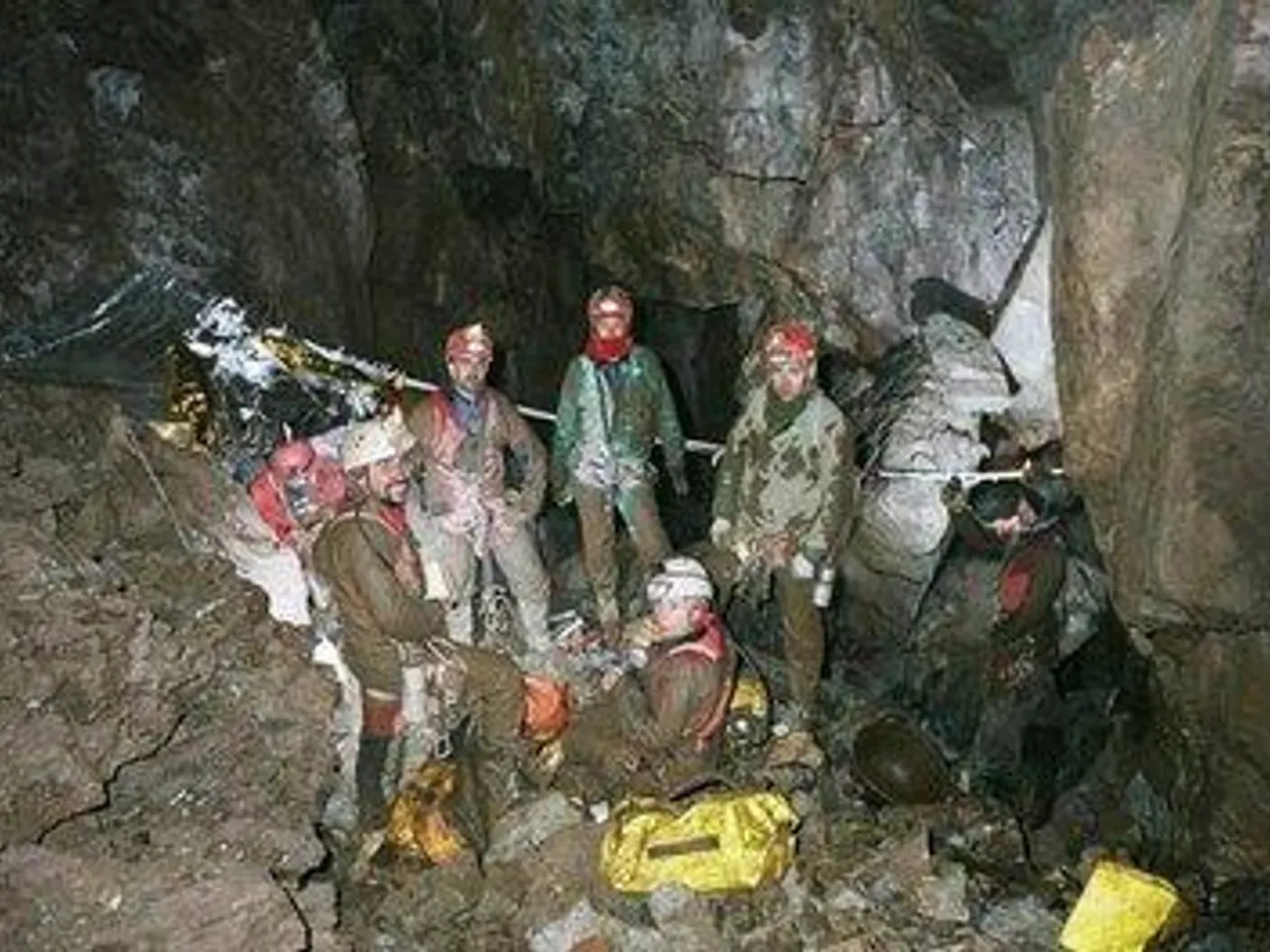
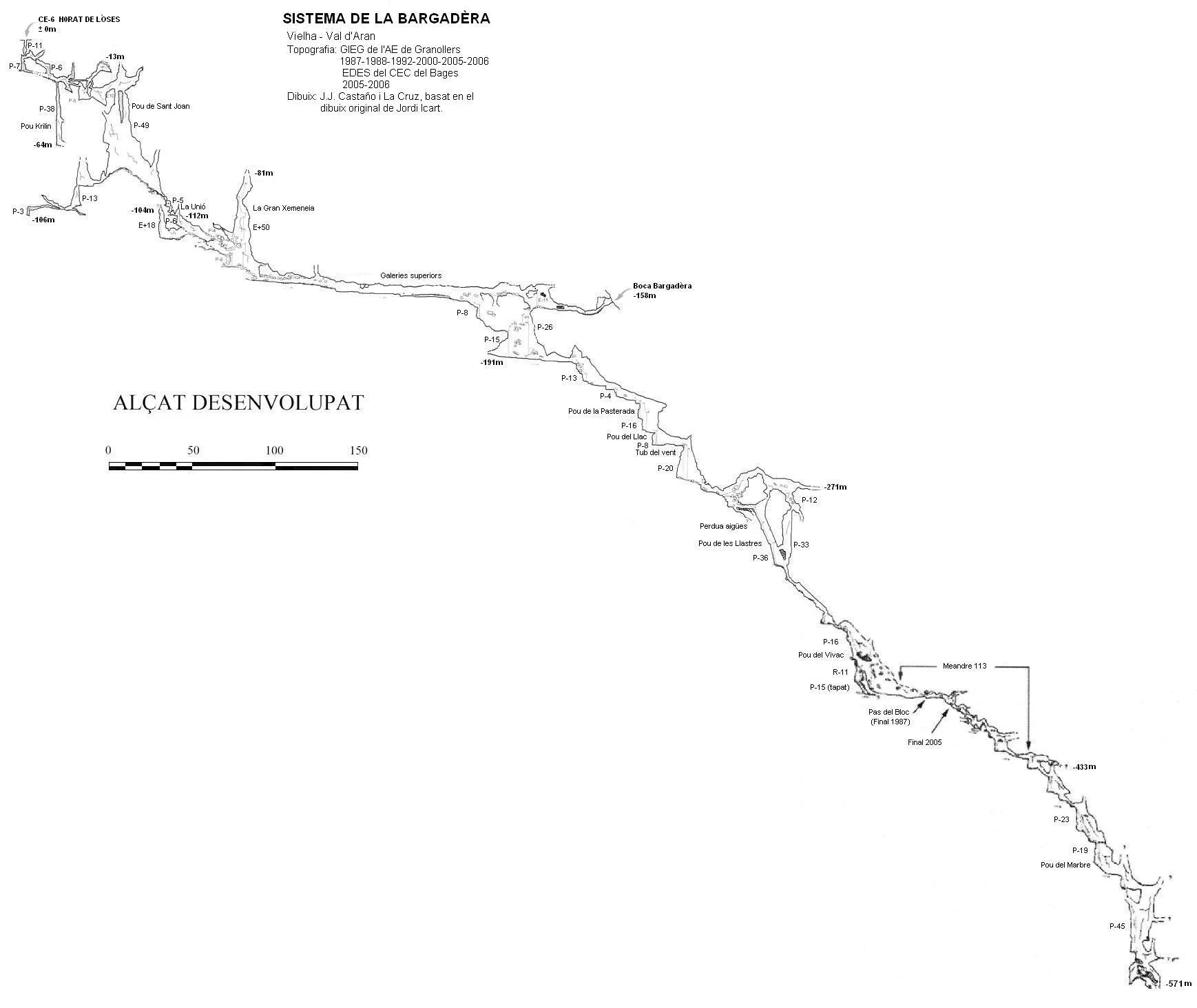
In Vielha e Mijaran (Val d'Aran), this is the deepest cavity in all of Catalonia. The GIEG located and explored it from August 1986 onward, reaching -236 m in 1987. It took more than two decades of successive digging work -- later continued by the Col·lectiu Escunhau, formed by the GIEG and the GREC -- to reach its current depth.
The survey shows its depth:
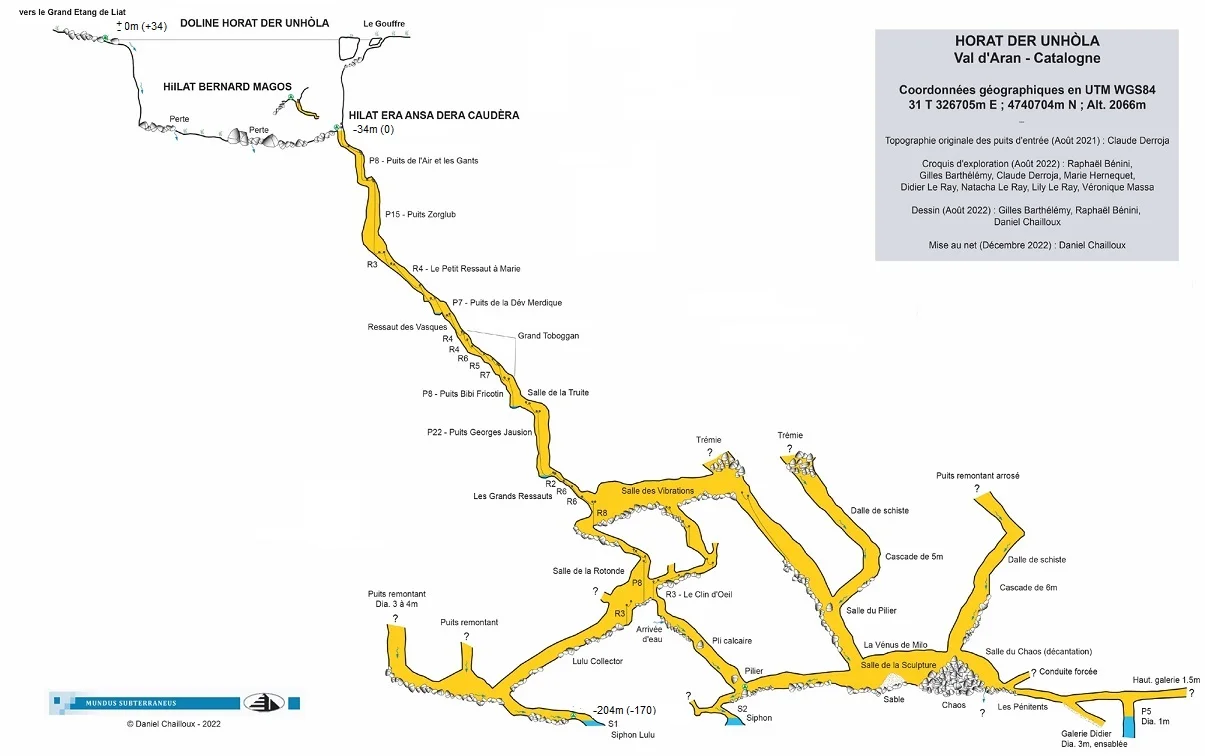
Horat Der Unhòla — 204 m
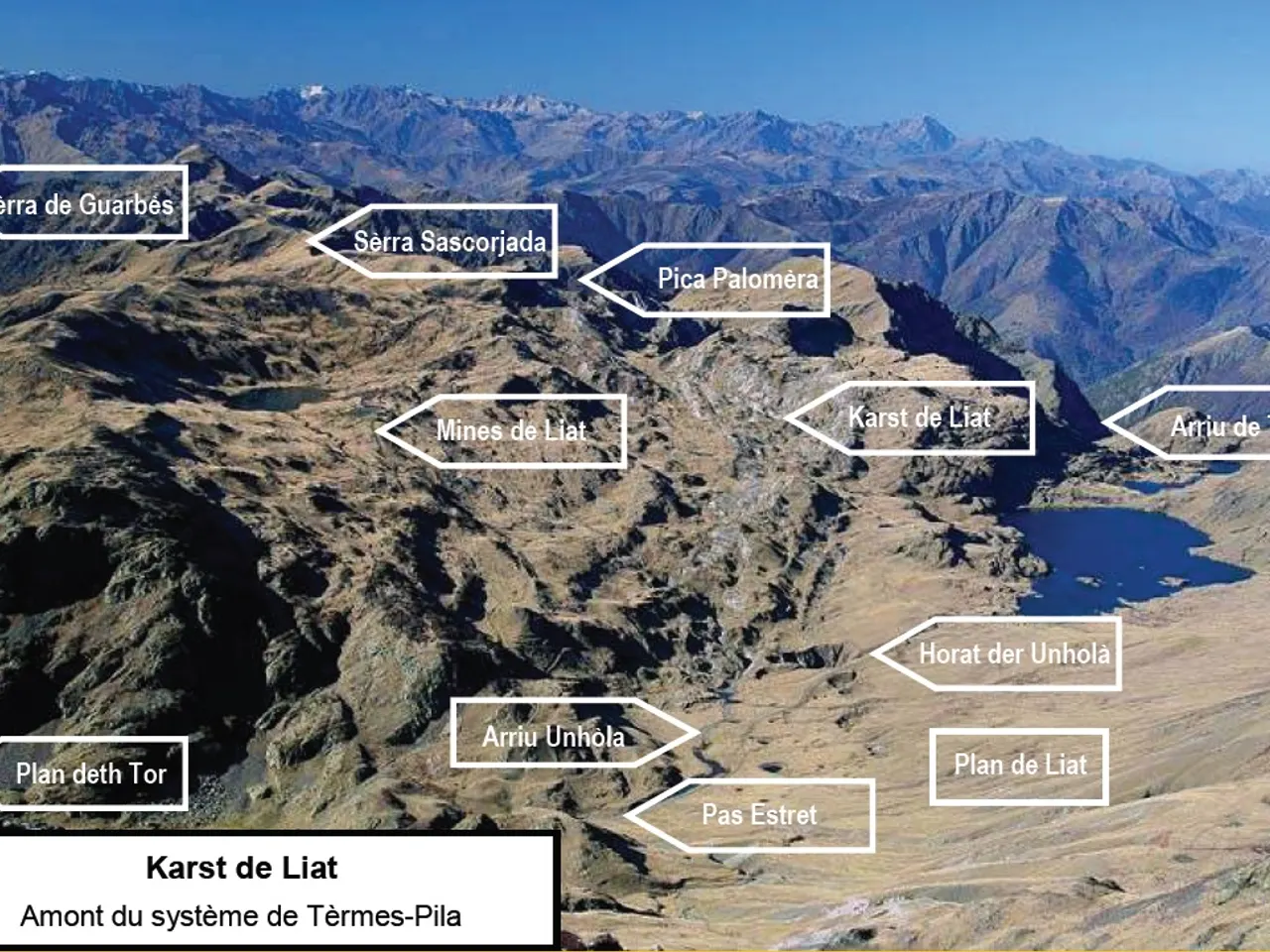
In Vielha e Mijaran (Val d'Aran), the large depression known as l'Embut de Liat has been known since ancient times by local shepherds and miners, yet it never appeared in the old speleological catalogues. On 4 July 1933, the legendary French caver Norbert Casteret injected fluorescein dye there that resurfaced two days later at the Hónt dera Pila, confirming its hydrological connection for the first time. It wasn't speleologically explored until 1973, by a Franco-Belgian expedition. A French collective resumed the work in 2018 and reached new chambers, but the campaign was halted in 2023 after the death of its driving force, Yves Besset.
Its surveyed layout:
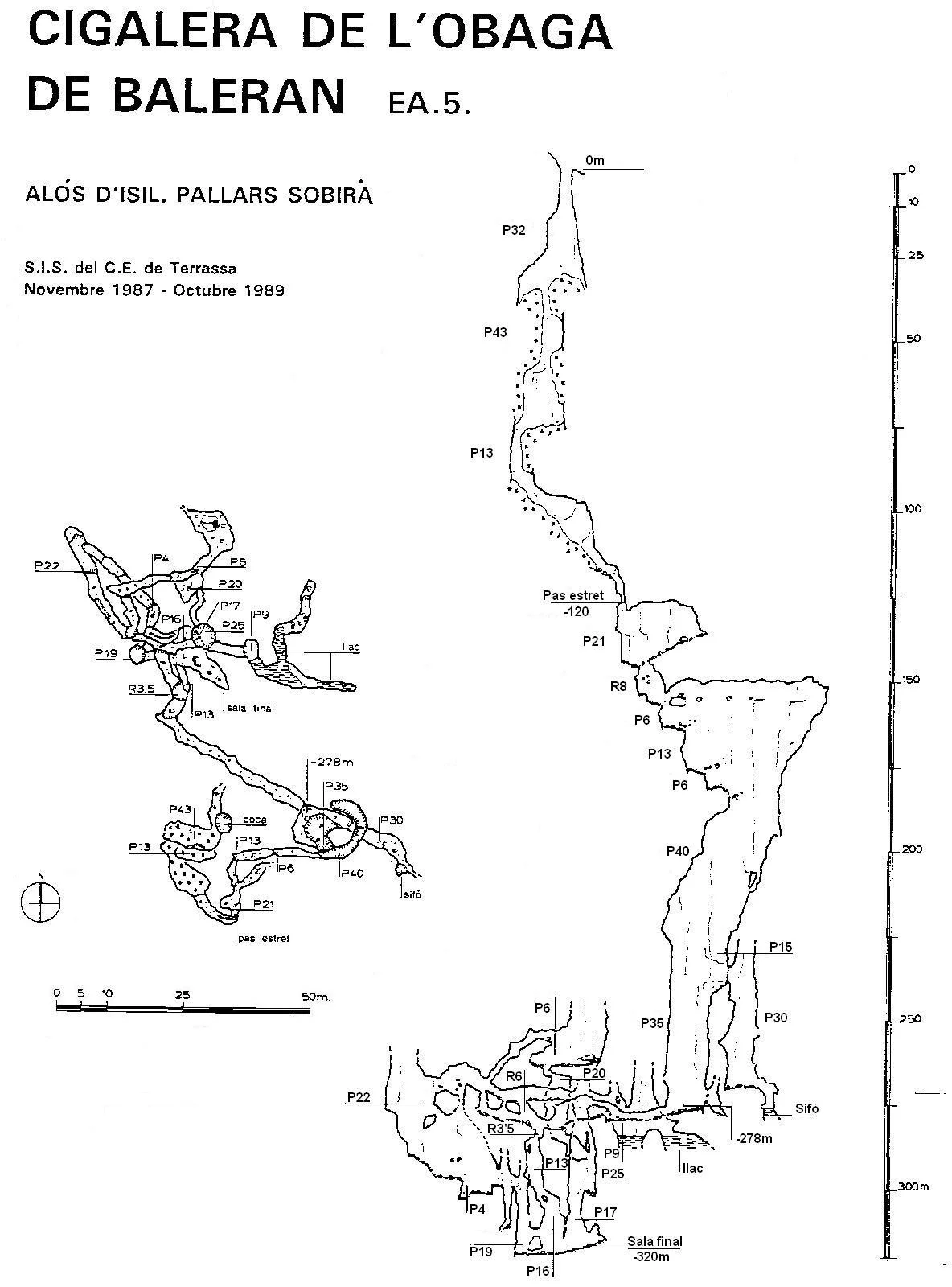
Cigalera de l'Obaga de Baleran — 320 m
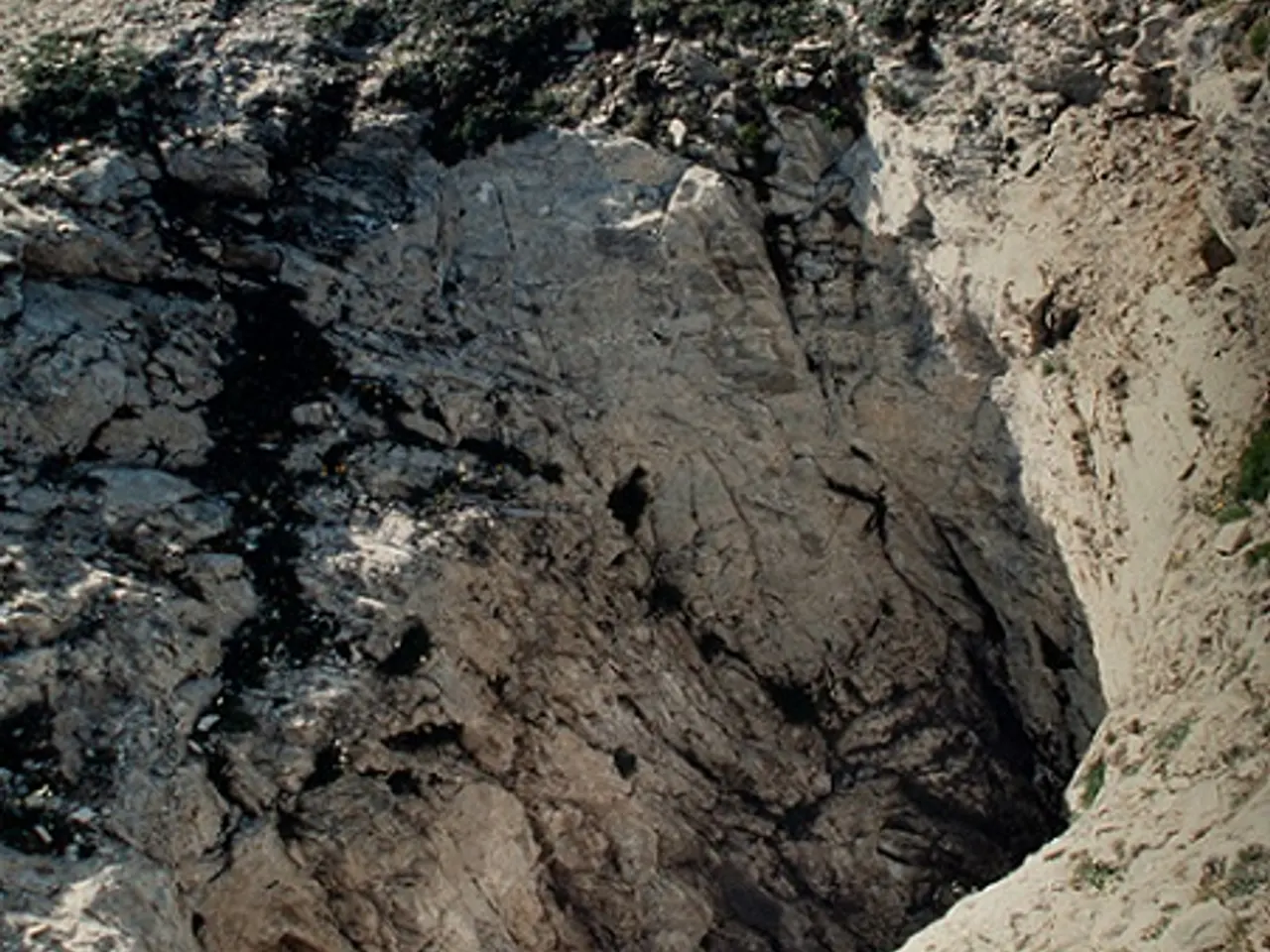
In Alt Àneu (Pallars Sobirà), local shepherds and hunters had long known of it, but it was located speleologically in the summer of 1977 by members of the SS Plantaurel, a French caving group, together with local cavers. Its entrance was pinpointed on 9 August 1977.
This is how it was documented:
Avenc de l'Esquerrà — 291 m
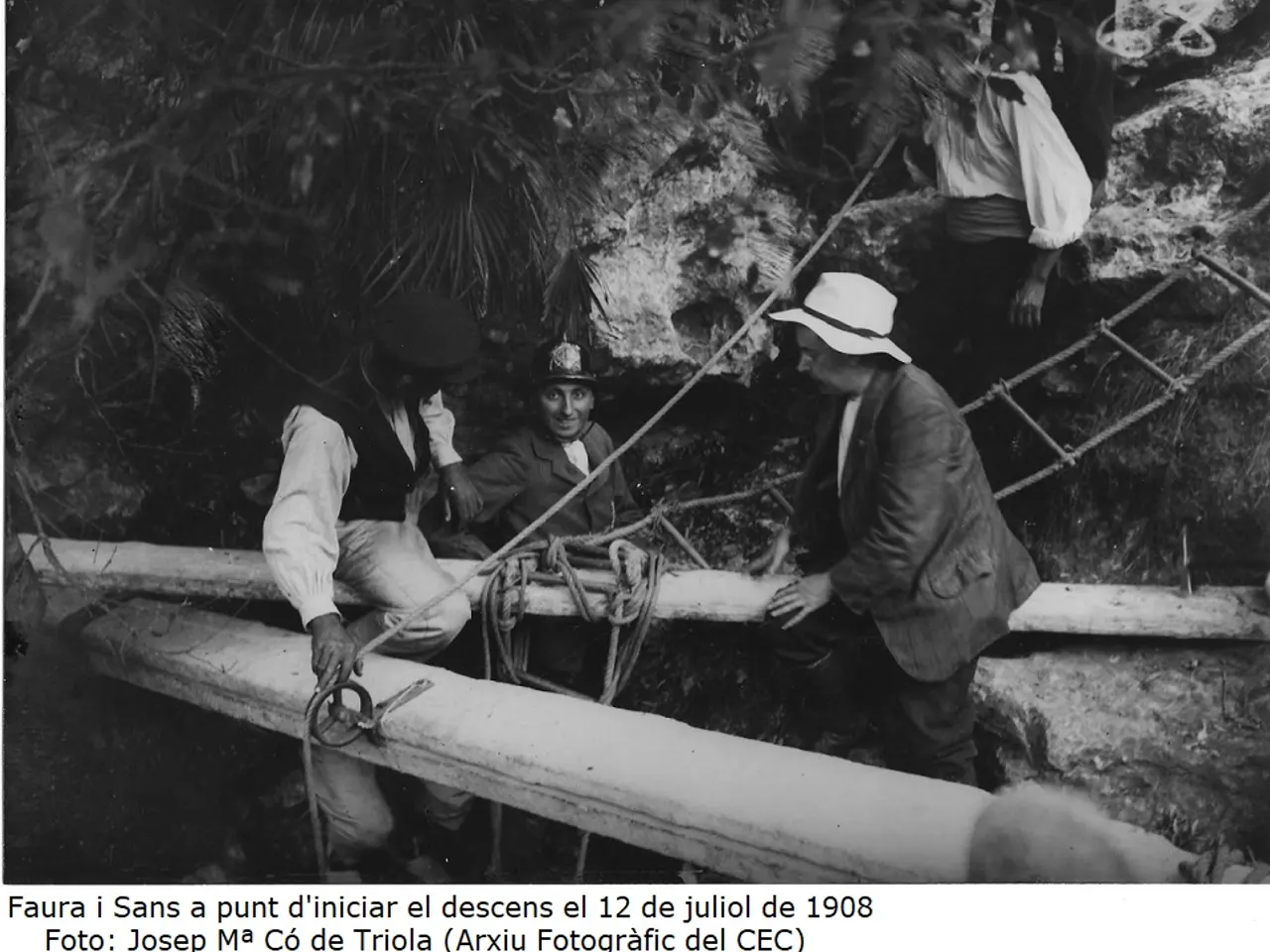
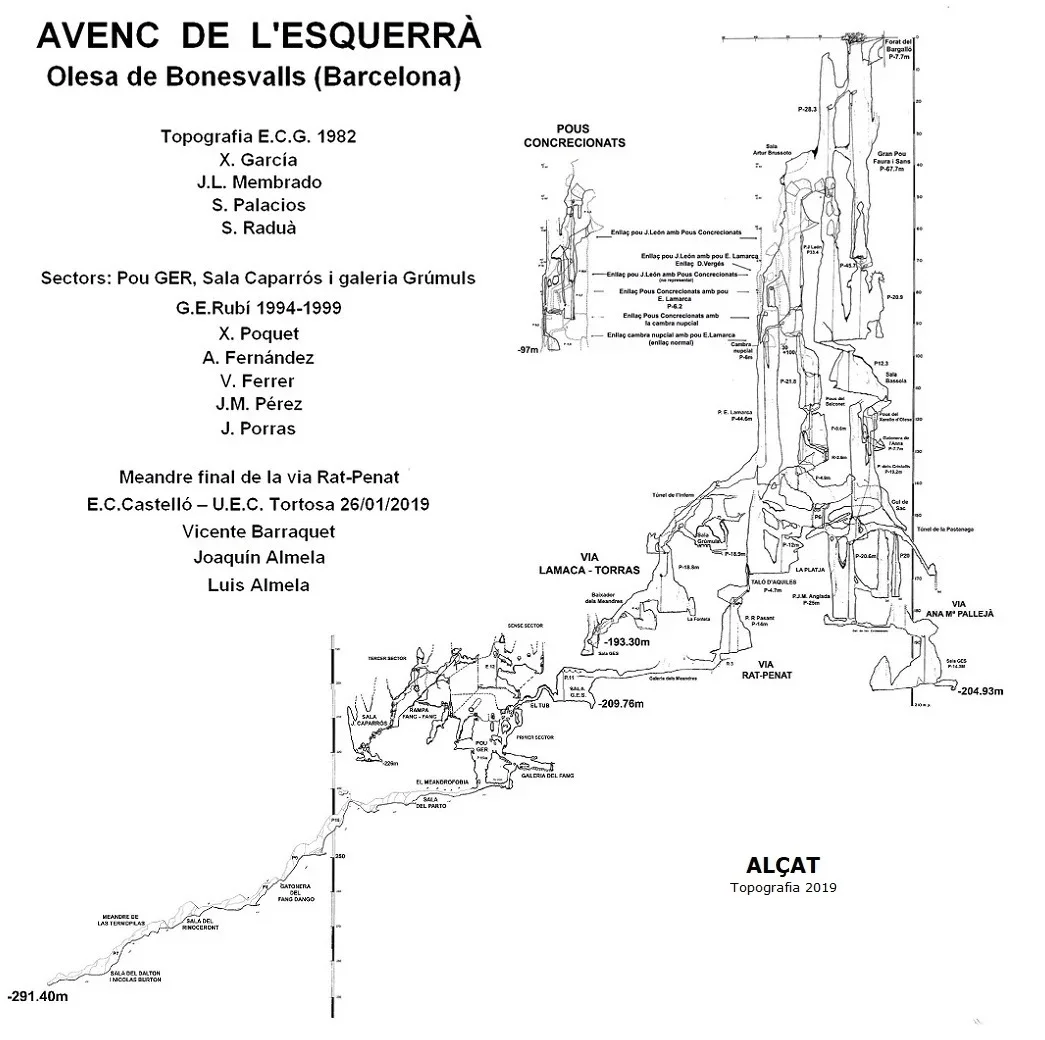
In the Garraf massif (Olesa de Bonesvalls, Alt Penedès), it is the area's most important and complex cavity. Font i Sagué already gave it its first bibliographic mention in his 1897 catalogue, with a depth of 76 m that he measured himself; the first real exploration, led by Faura i Sans with members of the Club Muntanyenc, took place on 12 July 1908.
Its surveyed layout:
Avenc CP.6 — 283 m
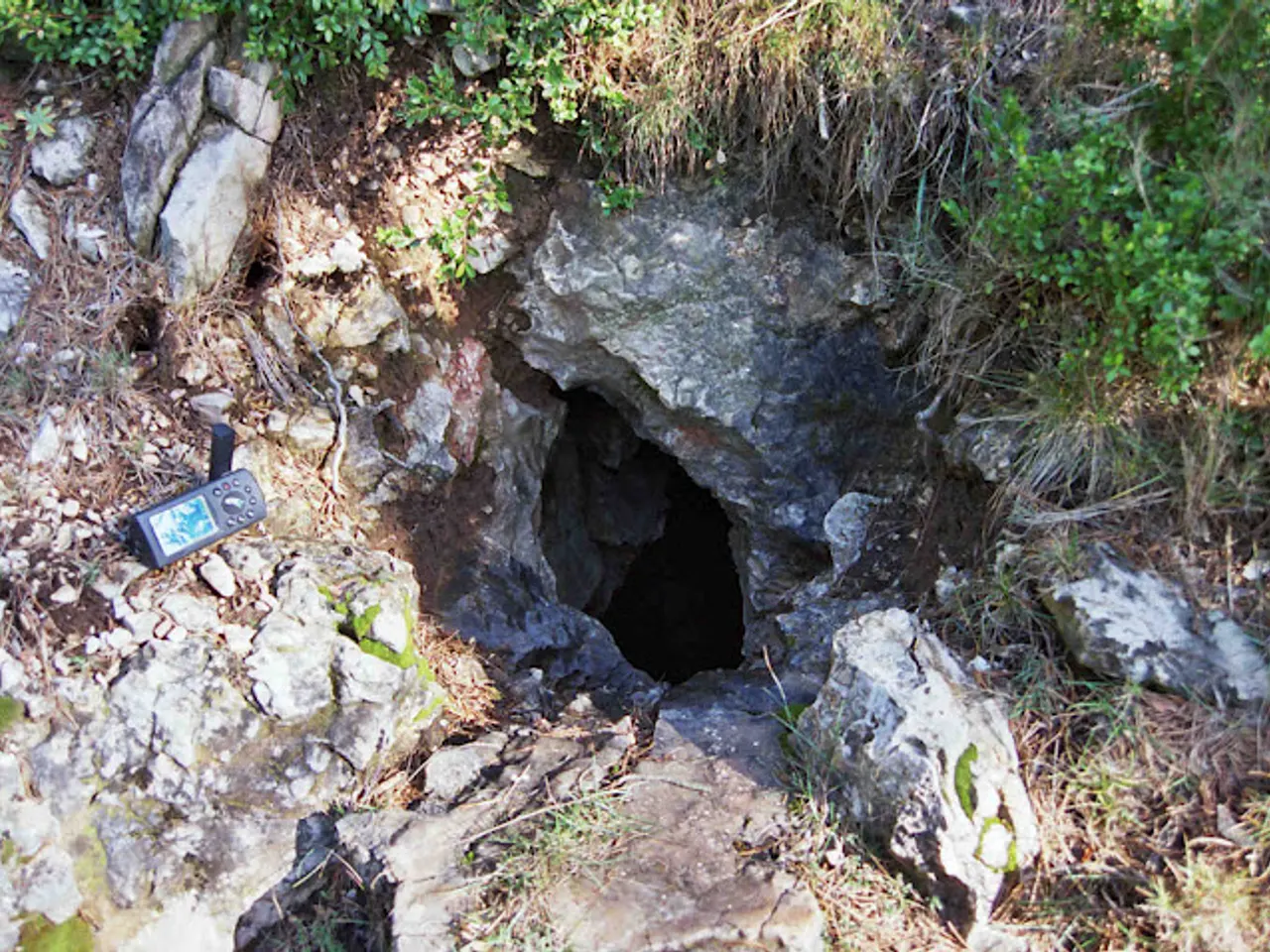
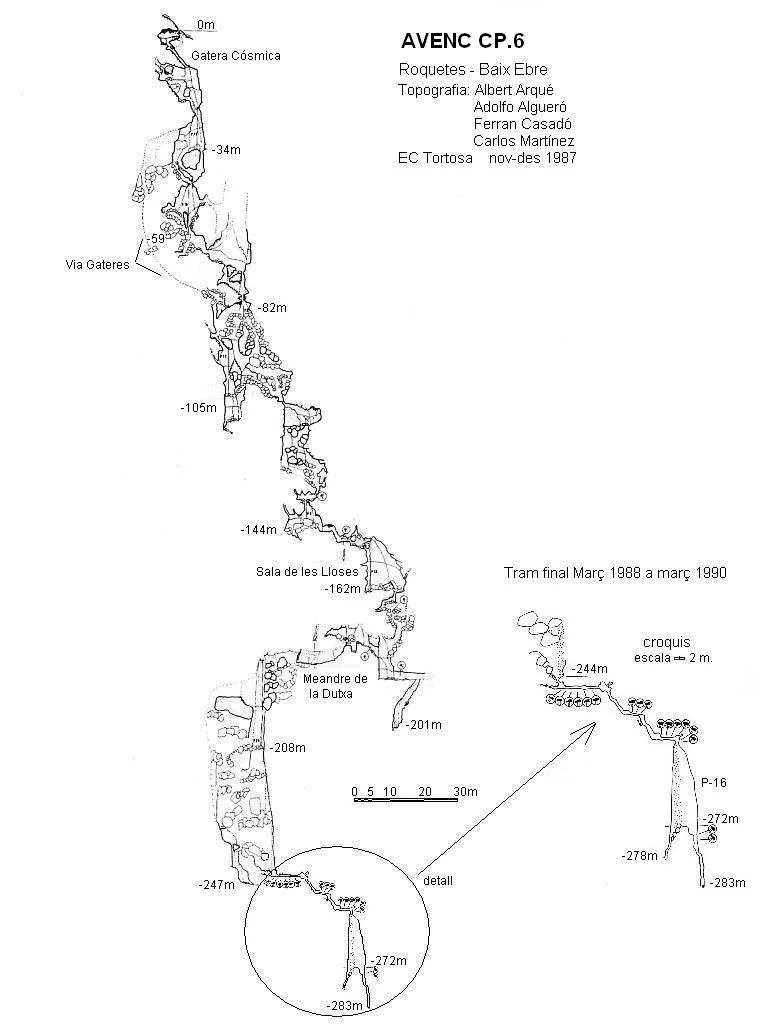
On the southern slope of Mont Caro (el Port, Roquetes), the Espeleo Club Tortosa began surveying the area in 1985 from the Barranc de Cova Pintada. The exploration required extensive digging through blockages; to power their tools, they went as far as installing an electric generator at the entrance to recharge drill batteries.
Survey of the cave:
All this data -- length, depth, coordinates and surveys -- comes from thefull catalogue of caves in Catalonia, which is updated as new explorations come in.